
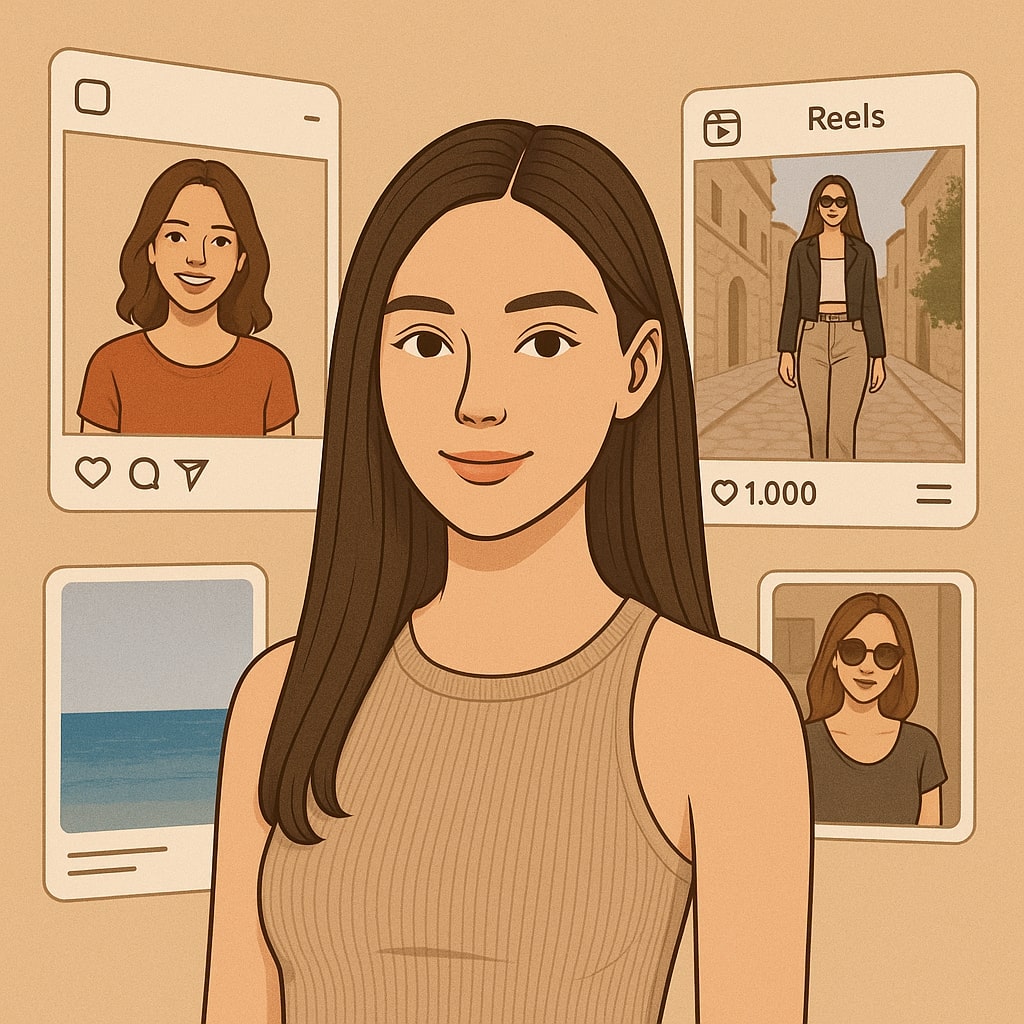
With the rise of artificial intelligence, the digital marketing world is constantly evolving and one of the most intriguing shifts is the rise of AI influencers (also known as virtual influencers).
Have you ever scrolled through Instagram, TikTok, or YouTube and seen someone so flawlessly styled that you thought, “There’s no way this person is real”? Well, you might have been right.
In this article, we’ll answer questions like “What is an AI influencer?” and “Why are brands increasingly partnering with these virtual characters?”, while exploring real-world examples of this growing trend.
What is an AI Influencer?
AI influencers are digital characters created with algorithms that look and act like real people. They give fashion advice, collaborate with brands, create music, and more.
While everything they share is code-generated, the experience they offer feels surprisingly “human.”
Managed entirely by software (not real people), AI influencers are designed to engage audiences on social platforms just like traditional influencers. In many cases, their content even outperforms that of real human creators.
Brands are now choosing these virtual personalities over human influencers for collaborations, and the results are turning heads.
Where Did AI Influencers Come From?
The phenomenon took off in 2016 with the creation of Lil Miquela by Brud, a tech company based in Los Angeles.
Lil Miquela, a virtual young woman interested in music and fashion, interacts with her followers, shares her “life story,” and even posts about “personal struggles.” Today, she has over 2 million Instagram followers.
Her success proved that virtual influencers aren’t just a tech novelty they’re powerful marketing tools and cultural icons. Unlike real influencers, AI characters:
- Face no physical limitations
- Can “wear” any style instantly
- Avoid scandals (unless their creators script one!)
Since then, many other AI influencers have emerged:
- Imma (Japan): A pink-haired, style-forward AI model
- Noonoouri (Germany): A virtual influencer collaborating with luxury brands
- Meta AI Personas: Hyper-realistic AI characters built into Instagram and Facebook
As AI evolves, these characters are becoming even more realistic and interactive.
Why Are Brands Using AI Influencers?
Brands are drawn to AI influencers for several reasons:
Cost-Effective & Scalable: They’re cheaper than human influencers and can appear in multiple campaigns simultaneously.
Always Active: They operate 24/7, producing content without time zone limitations.
Full Creative Control: Brands control their style, personality, and messaging.
Risk-Free: No scandals, no PR disasters.
Global Reach: Easily adapted for multiple languages and cultural markets.
Innovative Appeal: They merge technology and creativity, attracting attention.
Data-Driven Personalization: Their content can be tailored to specific audience data.
Unlimited Content Creation: Endless high-quality visuals and videos in no time.
How Are They Used in Marketing?
AI influencers are now a part of:
- Fashion campaigns (e.g., Prada and Dior worked with Noonoouri)
- Product launches and promotions
- Music, gaming, and entertainment content
- Metaverse & VR brand experiences
Some even optimize content based on social media algorithms, boosting engagement and reach.
The Ethical Debate: Real vs. Fake
As with any new tech trend, there are ethical concerns:
- Consumer Trust: Do people prefer real human faces behind brands?
- Transparency: Should it be mandatory to disclose that content was AI-generated?
- Identity Issues: Should algorithms determine a virtual character’s ethnicity, gender, or style?
What’s Next for AI Influencers?
AI influencers are just the beginning. The future could include:
- Virtual AI hosts at events in the metaverse
- Hyper-personalized AI influencers tailored to individual users
- AI characters with lifelike voice, facial expressions, and emotional responses
This isn’t just a passing trend it could redefine how brands and audiences interact.
So, what do you think?
Will the influencers of the future be AI-powered? Or do you believe human connection will always win out?
👇 Share your thoughts in the comments!
 Digital Ceren
Leave a comment